Buildings

Montenegro Capital City – Everything You Need to Know About Podgorica

Montenegro is often celebrated for its stunning nature, captivating attractions, and breathtaking landscapes- from its charming coastal towns to majestic mountains and expansive national parks. Yet, the capital city, Podgorica, often doesn’t receive the attention it truly deserves.

What’s even more intriguing is that Podgorica isn’t the only capital of Montenegro; the historic city of Cetinje also holds the title. But don’t worry, you’ll learn more about that as you read on.

For many travelers and tourists, the question of what exactly constitutes the capital of Montenegro can be confusing, especially with two cities sharing the role, each serving a distinct purpose. In this article, we’ll take a closer look at both cities and their unique functions, with a particular focus on Podgorica, the nation’s primary capital.
What Is the Capital of Montenegro?

The capital of Montenegro is Podgorica. It is the largest city in the country and serves as the political, economic, and cultural center. Although Podgorica is the primary capital, Cetinje holds the title of the historic capital and remains an important cultural and symbolic center of Montenegro.

Podgorica is the hub for government institutions, modern infrastructure, and commerce, while Cetinje retains its historical significance as the former royal capital.

Where is Podgorica, Montenegro Located?

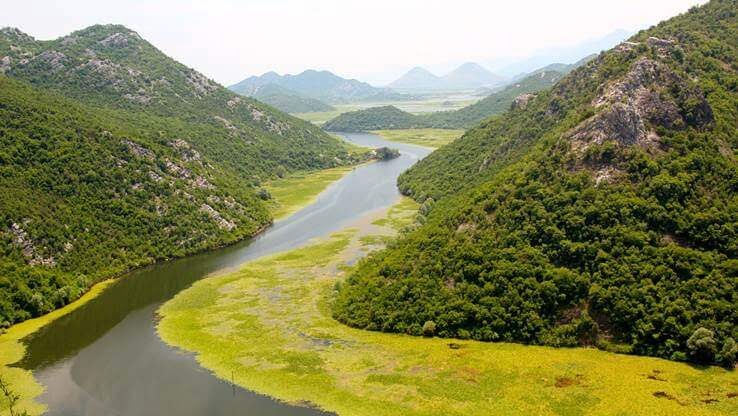
Podgorica is the capital of Montenegro, located in the central part of the country, nestled along the Morača River. The rivers Morača and Ribnica flow directly through the city, while Zeta, Cijevna, Sitnica and Mareza flow nearby, with Morača being the largest of said rivers.

Contrasted to the better part of Montenegro, Podgorica lies in an area that is mainly flat, in the northern Zeta plane, with the only exception being the hills that overlook the city, one of them being Gorica, the hill that city got its name from.

Is Podgorica Worth Visiting?

Montenegro capital city offers a unique blend of history and modernity. Visitors will find a vibrant cultural scene, historical sites, and a great base for exploring nearby attractions such as Lake Skadar, the Adriatic coast, and the mountains of Montenegro. It’s worth including in your itinerary if you’re looking to explore beyond the typical tourist hotspots.

Is Podgorica Safe?

Yes, Podgorica is extremely safe for both locals and tourists. The city has a very low crime rate, and violent incidents are rare. It’s a welcoming and peaceful destination where you can feel comfortable walking around, even at night. The local community is friendly and helpful, and tourists often find the city to be calm and secure.

What is Podgorica Known For?

Podgorica is known for being the capital of Montenegro and it’s famous for:

  • modern cityscape and history
  • the Morača River and Millennium Bridge – one of the city’s most iconic landmarks
  • Vibrant green spaces such as Park Njegoš and Sastavci Waterfall
  • Wine and Food: Montenegro’s wine culture thrives in Podgorica, where visitors can enjoy local wines and traditional Montenegrin dishes such as Njeguški pršut (smoked ham) and ćevapi (grilled meat).

What language is spoken in Montenegro Capital City?

The official language spoken in Podgorica, as well as throughout Montenegro, is Montenegrin. In Podgorica, English is commonly spoken, especially in tourist areas, hotels, and restaurants.

Podgorica Climate and Weather

As you well know by now, the weather in Montenegro can generally be described as warm and sunny, with mild winters along the seashore and harsh winters in the mountainous areas. However, Podgorica’s climate is slightly more humid and subtropical, with only one summer month being extremely hot.

Although Montenegro’s capital is situated just 35 km from the Adriatic coast, the Rumija Mountain acts as a natural barrier, separating Lake Skadar and Podgorica from the sea, thus limiting the coastal influence on the local climate.

Demographics - What is the Population of Podgorica?

One-third of all Montenegrin citizens live here, with Podgorica’s population amounting to 185 937 people. The majority of the population are Montenegrins, closely followed by Serbs. The other represented nationalities are Albanians, Muslims and Bosniaks.

Is Podgorica Also the Biggest City in Montenegro?

Yes, as the country’s capital and the largest urban center, Podgorica is the largest city in Montenegro. It serves as the political, economic, and cultural hub of Montenegro. The city is also a central point for transportation, making it a key gateway to other parts of the country.

Diverse Podgorica religion

The Montenegro capital is home to three major religious groups, those being Christian Orthodox, Christian Catholic, as well as Sunnite Muslim. The Orthodox Christian portion of the population mainly originates from Montenegrin and Serbian residents. The Muslim population is mostly Bosniak and Albanian, while Catholics are mainly a local Albanian minority.

Things to Do in Podgorica Capital City and Attractions to See

As Montenegro capital, Podgorica has a task to make you fall in love with it, so are some of the most popular things to do in Podgorica and places to see.

Old bridge

Visit Ribnica Bridge

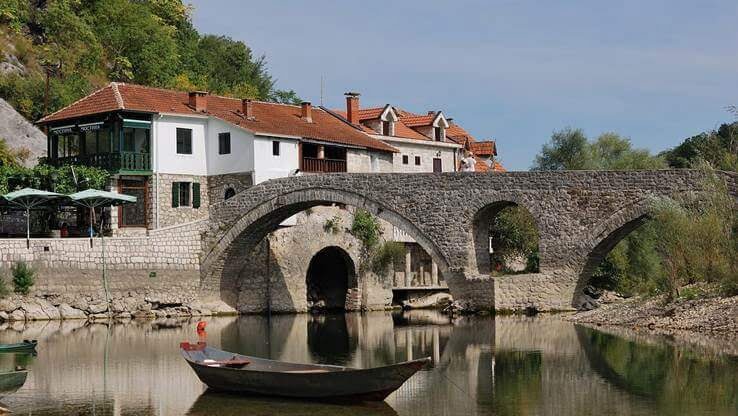
Being that Podgorica in Montenegro probably has the richest historical legacy, it is only fair to be the home of one of the most historic sites in the country, that being the Ribnica Bridge. What started as an outpost gradually became a settlement in its own right. The bridge was originally built by the Romans in the 5th century then renovated under Ottoman rule.

Podgorica Old City

Old Town (Stara Varoš), might not resemble the famous coastal towns such as Kotor, Budva and Herceg Novi, but it still has its own unique historical value. It was built under Ottoman rule, now containing shopping districts with jewellery shops, restaurants and boutiques.

Since the Montenegro capital was heavily bombed during WWII, not so much of the old city remains, but you can visit the Turkish mosque and the clock tower (Sahat kula).

Podgorica Museum and Its Treasures

Even though most of the historical artefacts are put on display in the old capital of Montenegro (Cetinje), Podgorica managed to keep some of them, mainly concerning Doclea. They represent an interesting display of items from everyday life, as well as Doclea antiquities. Apart from the archaeological display, there are also ethnographic, historical and cultural findings as well.

Famous Plantaže Winery

This is something you definitely didn’t know, but Montenegro capital is actually home to the largest unbroken vineyard in Europe, owned by the most famous Montenegrin winery – Plantaže. These wines are basically impossible to miss – every tavern and a restaurant serves their wine. 

If you like wine and want to try out some Montenegrin homemade then be sure to visit Plantaze Sipcanik wine cellar and do some wine tastings. Tastings also include a ride through the tourist train, a guided tour of the Sipcanik wine cellar, as well as an expert guide through the tasting.

Montenegro’s Very Own Niagara Falls – Cijevna Waterfall

This natural wonder is just a short drive from Podgorica, making it the perfect getaway. It’s a great spot to relax and enjoy a meal at a nearby restaurant with charming outdoor seating by the Cijevna River, where you can savor classic Montenegrin meat and fish dishes.

To reach the waterfall, simply walk past the outdoor seating area and restaurant, and you’ll be greeted by a truly breathtaking sight, with waterfalls seemingly surrounding you. We recommend visiting in the spring, as the falls can be dry during the peak summer and early autumn months.

If you’re traveling with children, they’ll love this spot! The restaurant features a play area with adorable animals for the kids to pet.

Ruins of Duklja

Duklja is one of Montenegro’s most remarkable archaeological and heritage sites. Founded over 2,000 years ago, this ancient Illyrian settlement is home to a necropolis with more than 300 tombs, dating back to the 1st century.

Church of the Resurrection of Christ in Montenegro Capital

This Orthodox church, located in the heart of Montenegro’s capital, was founded in 1993. Set in an open field and surrounded by tombstones, some dating back to the 9th century, it offers a striking contrast of history and modernity.

The church is renowned for its unique design. At the base, large, rugged stone slabs give way to smoother, finer stone as you look upward. The exterior is adorned with beautiful ornate details, while the interior is equally stunning, featuring intricate frescoes and murals that enhance its spiritual atmosphere.

River

Dress Code for an Orthodox Church - Mini Guide

If you’ve never visited an Orthodox church or monastery before, it’s important to know that there are specific dress code guidelines to follow. These rules apply to all Orthodox temples, including those in Montenegro’s capital. When entering a church, you should dress modestly, ensuring that your shoulders and knees are covered.

You can also purchase candles to light and place inside the church, typically in the small chapel. This is a way of seeking blessings for a specific person or for your entire family. Inside the chapel, you’ll find two trays – one at the top and one at the bottom. Candles for the living are placed in the top tray, while the bottom tray is reserved for the deceased.

Podgorica - A History of Turbulence and Rocky Geography

The fascinating history of Podgorica, Montenegro’s capital, offers a captivating journey through the ages. Its tumultuous past has deeply influenced not only its infrastructure but also the way of life and the character of its people. Podgorica is not only the largest city in Montenegro but also one with a unique distinction- it has undergone five name changes throughout its long and storied history.

Early Podgorica History – From the Illyrian to Modern Times

Some of the oldest cultural remains show that the modern-day city was probably inhabited in the Stone Age, but the concrete evidence shows the existence of an Illyrian and Roman settlement, known as Birziminium, located at the confluence of the rivers Ribnica and Morača. 

In the Illyrian period, the area was inhabited by two tribes, the Labeati and Docleati, with the Docleati being of greater reference to this story. They settled in the Zeta river valley and thanks to the fertile plain of the river and favourable geography, they managed to get easy access to trade routes, which in turn helped them to establish stable economic growth.

Thanks to this course of events, their settlement, Doclea, became the centre of the province at the time, and today is one of the most, if not the most important settlement in archaeological sites in the country, located just a few kilometres out of Podgorica. The name of the said province was Prevails, and the archaeological data showed that its centre was inhabited by an outstanding 8 to 10 thousand people, which is probably the factor that ensured steady economic growth.

Monument

The Rise of Podgorica Capital of the Zeta Region

It might seem destined that Montenegro capital had to be situated in this region, since various centres from the course of history were all settled here, with Zeta beginning to emerge in the 11th century. With the rise of the more important settlement known as Ribnica, which was later renamed Podgorica, the story of Montenegro capital begins.

The name Podgorica was first mentioned in 1326., in a document store in Kotor, where it referred to a hill named Gorica, located in the northern part of town. Nevertheless, during the Middle ages, Podgorica grew to become an important cultural, religious and trading centre, mostly thanks to its favourable position – the plane of the Zeta river made it into an important crossroad, on many regional trade routes.

As much as the city prospered, it has always been on the edge of turmoil, never catching a break – in the year 1484. it was conquered by the Turks, in a reign that lasted for more than 4 centuries. During this period of time, the Montenegrins never stood idle, struggling constantly against the oppressors, finally gaining independence in the year 1878.

World Wars and the Montenegro capital

The turmoil never stopped, but actually increased with the coming of the World Wars. World War I broke, and Podgorica was ultimately taken by Austrian troops, liberated in 1918. In the period between the wars, Podgorica population amounted to 13 thousand people. After the Second World War broke out, Podgorica was bombed more than 17 times and was almost completely destroyed, having lost over 4 thousand lives.

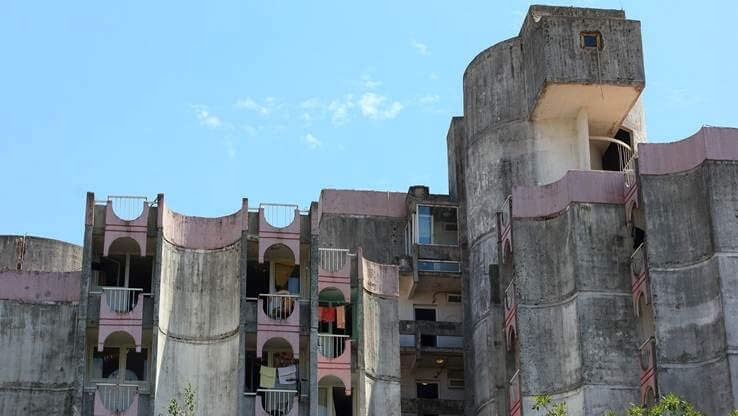
After the Wars, the Montenegro capital began its new life as Titograd, becoming Tito’s city, marked with typical socialist-style buildings, apartment blocks, parks and identical streets. Today, Podgorica commands a modern infrastructure that rivals other European capitals.

Mount view

A Brief History of Old Royal Capital Cetinje Montenegro

The historic royal capital of Cetinje was founded in 1482 by Ivan Crnojević, the Lord of Zeta. Though its history is not as long as that of Podgorica, its foundation was a significant event. Crnojević established the city in an effort to escape the looming Ottoman invasion – an attempt that ultimately proved futile.

Due to its strategic location, Cetinje faced frequent attacks from both the Ottomans and the Venetians throughout the 16th and 17th centuries. Despite this, Cetinje’s cultural significance remains paramount for Montenegro. Crnojević established a royal court and the Old Cetinje Monastery, one of the most important monasteries in Montenegro. The city also played a key role in the development of literature, housing the first-ever printing press in southeastern Europe.

Present Role of the Two Cities – the New And Old Montenegro Capital

Cetinje was Montenegro’s first capital, having been recognized as such in 1878 following the country’s independence from the Ottoman Empire. When Montenegro became a kingdom in 1910, the city further solidified its status as a key cultural and political center.

However, after the two World Wars, Podgorica was chosen as the new site for the Parliament and, consequently, the new capital. Today, Cetinje primarily houses the presidential residence.

We hope you enjoyed this historical journey through Montenegro capitals and that it has inspired you to visit Podgorica. While it might be a bit “off the beaten path” if you’re renting apartments at the beautiful Porto Montenegro marina, trust us – it’s worth the drive. It’s a perfect starting point for diving deeper into the rich history of our country.