Lovcen National Park – discover the beauty of black mountain
Lovcen National Park is located in mountain Lovcen which is a part of the Dinaric Alps, in the southeast of Montenegro, between the Skadar Basin, the Bay of Kotor, and the Budva Riviera. It includes the area of 6,220 hectares, in the central and highest part of the mountain which represents a symbol of freedom and a “holy altar” to all of the Montenegrins.
Lovćen was declared a National Park in 1952. with the significant cultural and historical value among the locals. The famous serpentines represent a kind of architectural relic which is, besides the Mausoleum, one of the most visited places in the country.
Located at the intersection of two climate zones, Mediterranean and Continental, Lovcen National Park is inhabited with numerous endemic animal and plant species. The interesting fact is that one-third of the existing diverse Montenegrin flora grows here.
Why is Lovcen National Park so special to locals and tourists from all over the world? Here are some interesting facts that will help you find out the secrets of this amazing place.

The historical significance of National Park Lovcen Montenegro
The history of Lovcen National Park is connected to the whole history of Montenegro country. The town called “Njeguši”, in mount Lovcen Montenegro, is a famous birthplace of the most important historical figures of the country, the ruler, bishop, poet, and philosopher Petar Petrović II Njegoš and King Nikola I Petrović, the last ruler of Montenegro.
The resting place of our beloved bishop prince Petar Petrović II Njegoš
Petar Petrović II Njegoš is the author of the patriotic epic called “Gorski Vijenac” (The Mountain Wreath) which became widely popular among the southern Slavs. He built a church on Lovcen in 1846, dedicating it to his also famous uncle, Peter I, the later Saint Peter of Cetinje.
In the year of 1916. Njegoš’s remains were secretly transferred to the Cetinje Monastery. The artillery of the Austro-Hungarians largely destroyed the church-chapel.
Years later, in September of 1825, the chapel was rebuilt by Yugoslav authorities who decided to change the appearance of Jezerski vrh by building a mausoleum. Two years later, the tomb was finally finished and Njegoš’s remains were put to rest forever.
The masterpiece of Ivan Meštrović and the tallest mausoleum in the world
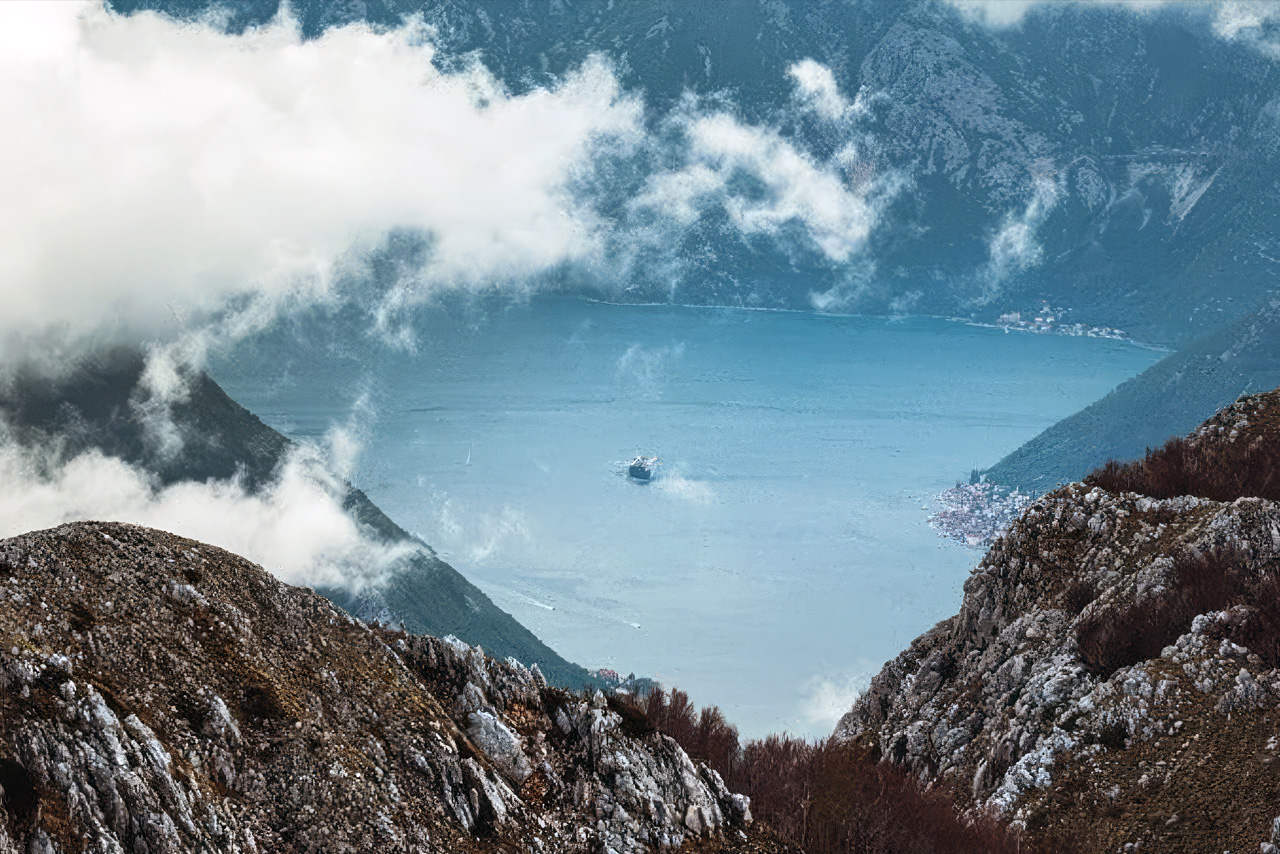
The Lovcen Mausoleum Montenegro, famously known as Njegos Mausoleum in Lovcen National Park was built from 1970 to 1974. It is considered to be the masterpiece of sculptor Ivan Meštrović which combined architecture with art. It is the tallest mausoleum in the world and the eternal resting place of Petar Petrović II Njegoš. From the top of the Lovcen Mausoleum, you can experience a breath-taking view of Bay of Kotor and the Katun Nahija, beautifully described as the “Stone Sea” by Bernard Shaw. It is one of the most visited sites in Montenegro.
Access to Njegoš’s Mausoleum is difficult during the winter, due to the snow on the mountain, which often lasts until May but the mausoleum can be reached by the Kotor Lovcen road from Cetinje, which is 13 km away.
King Nikola I Petrović – the last ruler of Montenegro
Lovcen Park is also the birthplace of King Nikola I Petrović who was born in the village of Njeguši, where the ruling, Petrovic-Njegoš dynasty originated from. He was the prince of Montenegro from 1860. to 1910. and then our king for eighteen years (1910-1918).The house of King Nikola I of Montenegro in Njeguši village, in Cetinje Municipality, is also a very popular place to visit. The beauty of this historical place is authentic and special thanks to its gardens and meadowlands.

Lovcen National Park – the authentic beauty of nature
The seat of the National Park Lovcen is in Cetinje. Mount Lovcen Montenegro, also called “The Black Mountain” is the reason how Montenegro got its name. It rises to a height of 1749 meters, with two glorious peaks, Štirovnik and Jezerski vrh, both around 1700 meters above the sea level.The slopes of the National Park ridge are rocky, with many deep valleys, pits and gorges, which give a sensational landscape.
Flora of Lovcen National Park – the paradise for rare plants
In the National Park, beech and oak forests make up about 70% (4,299 ha) of the total area. The remaining 30 % are karst slopes, high mountain arable meadows, and pastures. There is a large number of endemics, protected and rare plants. The forests are filled with species such as black hornbeam, ash, pine, silver linden, beech, spruce, etc.Herbaceous and woody plant communities are represented by 1,300 species, many of which are endemic, rare plants, medicinal and aromatic plants. About 200 species of mushrooms have been registered in National Park.
One of the most interesting facts about National Park Lovcen is that one-third of the total number of plant species of Montenegro and Balkan peninsula live on the mount Lovcen, which is about 1300 herbaceous and woody plants.
Fauna of Lovcen National Park – mammals, birds, reptiles and amphibians
When it comes to the fauna of the mountain, there are mammals such as wolves, foxes, rabbits, deers, bears, boars, etc. White-breasted hedgehogs, blind moles, squirrels, karst mouses, horseshoe bats, and the endemic of southern Montenegro are the typical representatives of Lovcen Montenegro. There are 200 species of birds that visit the National Park during migrations or nest there, such as robins, woodpeckers, nightingales, jays, grasshoppers, etc. Many of the species are registered and under international protection and national legislation of Montenegro.
In the foothills of Lovcen Park massif, there are springs such as Obod, Obzornica, Podgorička vrela, etc. Ivanova korita (Ivan’s riverbeds) is the most famous spring whose appearance is captured in the 19th century. It is placed under the special protection of the country.
The climate of Lovcen mountain – a natural border between sea and land
Lovcen mountain is considered to be a natural border between sea and land because of its location, only 4-5 kilometres from the Adriatic sea. According to its geographical position, it has a very specific climate which is best described as a mountainous and moderately continental climate.cOn the annual level, there are between 2,500 and 3,500 liters of rainfalls.
The five zones of Lovcen National Park
In Lovcen, there are five zones with special management and regime of use. All of them represent the beauty and authenticity of the National Park of Montenegro.
The Beech zone – the home of beech forests and black pine cultures
Located between Jezerski vrh (Lake’s peak), Babljak, Štirovnik and Goliš, the Beech zone consists of coniferous and rare deciduous crops. The area of the beach zone is approximately 876 ha with mainly beech forests and black pine cultures. This zone also includes karst bays such as Ivanova Korita, Dolovi Kuk, Veliki Bastur, Mali Bastur, and others.
The zone of Munika forests – the highest peaks of the mountain
The Munika pine forest zone is located on the highest peaks of Štirovnik and Jezerski Vrh, on the steep slopes. It is the area of about 68 ha and it covers a belt above the beech forest at an altitude of 1.600 meters.
Pine forest curve zone – the narrow zone of the National Park
The area between Blatište, the narrower zone of the Park and Rupe, at about 1,300 meters above sea level is the Pine forest curve zone. Different cultures of pine curves can be found here, perfectly acclimatized with the enormous National Park.
The zone of Konjsko – a beautiful landscape of meadows
Located in the southwestern part of the National Park, high above the Budva bay, surrounded by Rujiški and Majinski peak in the west, Kuljis in the east and Hum in the north, the Konjsko zone has an interesting micro-landscape with beautiful meadows called Malo Konjsko and Veliko Konjsko. This zone is one of the tamest bays in National Park Lovcen and it consists of high and old beech stands.

The lake below Jezerski vrh – herpetological reserve
There is also a special herpetological reserve below Jezerski vrh (Lake’s peak) with an altitude of 1,360 meters. It is a habitat of populations of small and headed hummingbirds, and other amphibians and reptiles.
The Adventure Park Lovcen – the area for adrenaline activities
In Ivanova Korita, in the immediate vicinity of the resort, there is an area of 2 hectares where 7 trails have been built for the purpose of sports and extremely adrenaline activities. There are about 15 different games on each track that are located at different heights. Tracks are specially adapted to people between 5 and 70 years. Each visitor of the Lovcen Adventure Park gets all the necessary equipment such as belts, helmets, and gloves to use on the trail.
In the adventure park Lovcen there is a professionally trained team of people explaining the rules and how to play those games. Each track is marked with yellow, green, blue, red and black colour.
The games are realized on 15 different wooden platforms at certain heights t. Users are switching from one platform to another with various obstacles that they have to pass in order to reach the goal.
Security and insurance by European standards are provided for everyone in Lovcen Adventure Park. The ticket price is determined by the age of the user for a period of two and a half hours.
Other popular activities in Lovcen National Park
Besides the Adventure Park Lovcen, there are numerous other activities and sports events such as April and September meetings of Goran ethnic community,Mountain-speed car race (which is held on July the 13th – Statehood Day of Montenegro), Mountain biking, etc. When it comes to Lovcen National Park hiking is one of the most popular activities. There are also walking routes, which are very popular among tourists. Hikers in the Park area can enjoy and take advantage of marked trails.
When it comes to hiking Lovcen National Park is beautiful during the early mornings, when the weather is not too hot and unbearable.
Visiting Lovcen National Park from other parts of Montenegro
No matter where you are situated in Montenegro, there are several different routes you can take if you want to visit Lovcen National Park. If you are visiting the National Park from Podgorica, the capital of Montenegro, you will head to Cetinje town. The road distance is 61.6 km and takes approximately 1 hour and 15 minutes by car.Since National Park is situated near Kotor Lovcen could be easily reached on foot too. The Kotor Lovcen hike is one of the most popular hiking routes in Montenegro. You can take the famous stairs called “Cattaro ladders” that will lead you to the road close to Jezerski Vrh and the infamous mausoleum.
If you are not an experienced hiker, we recommend you to go by car, bus or taxi, because the Kotor Lovcen hike could take more than 4 hours.
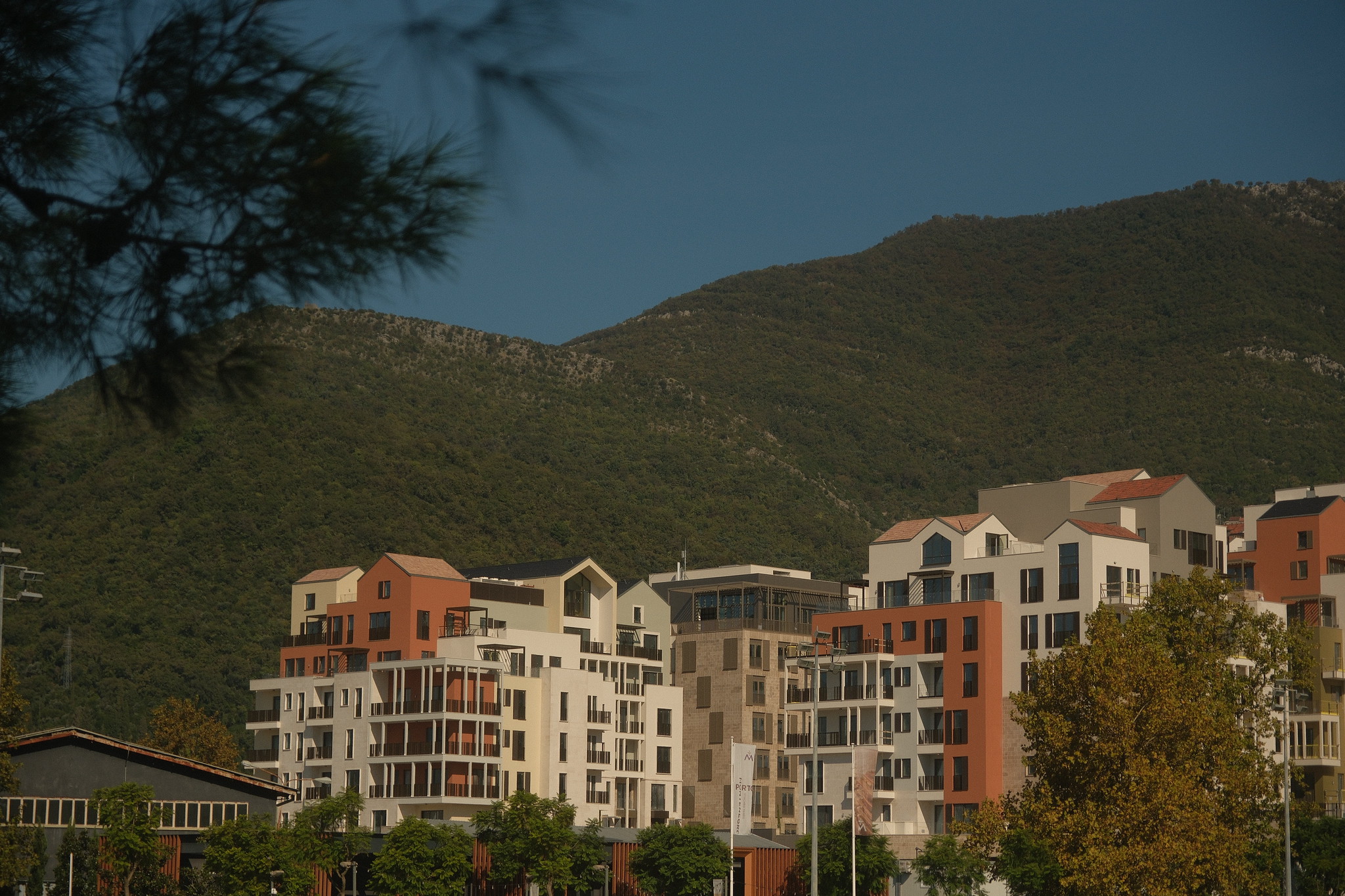
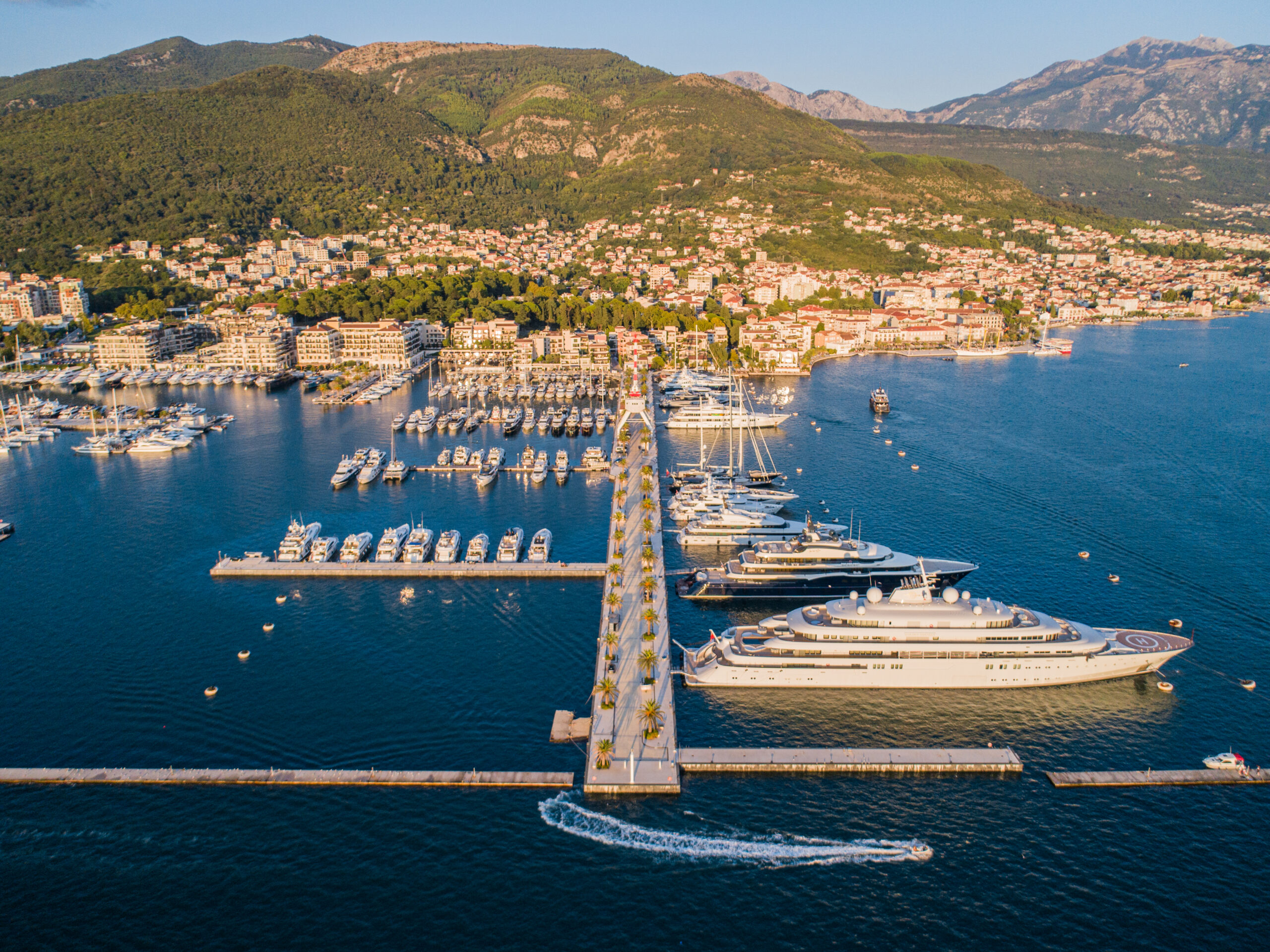
If you are staying at Porto Montenegro, the luxurious bay with a beautiful marina, the route to Cetinje is about 36 kilometres long which will take about 1 hour of the car ride. The beautiful sights of the sea and nature in Montenegro will leave you amazed while travelling to National Park.
Lovcen National Park – the idyllic get-away spot
Lovcen in Montenegro has an iconic setting which is fulfilled with idyllic nature. It is a day retreat and vacation get-away spot for Montenegrins, with so much to offer for the whole family.According to the huge amount of visits, Lovcen National Park Montenegro is one of the most popular and beloved places not just in Montenegro, but in the whole south-eastern Europe where people love to make most of their holidays surrounded by beautiful nature and countryside.